


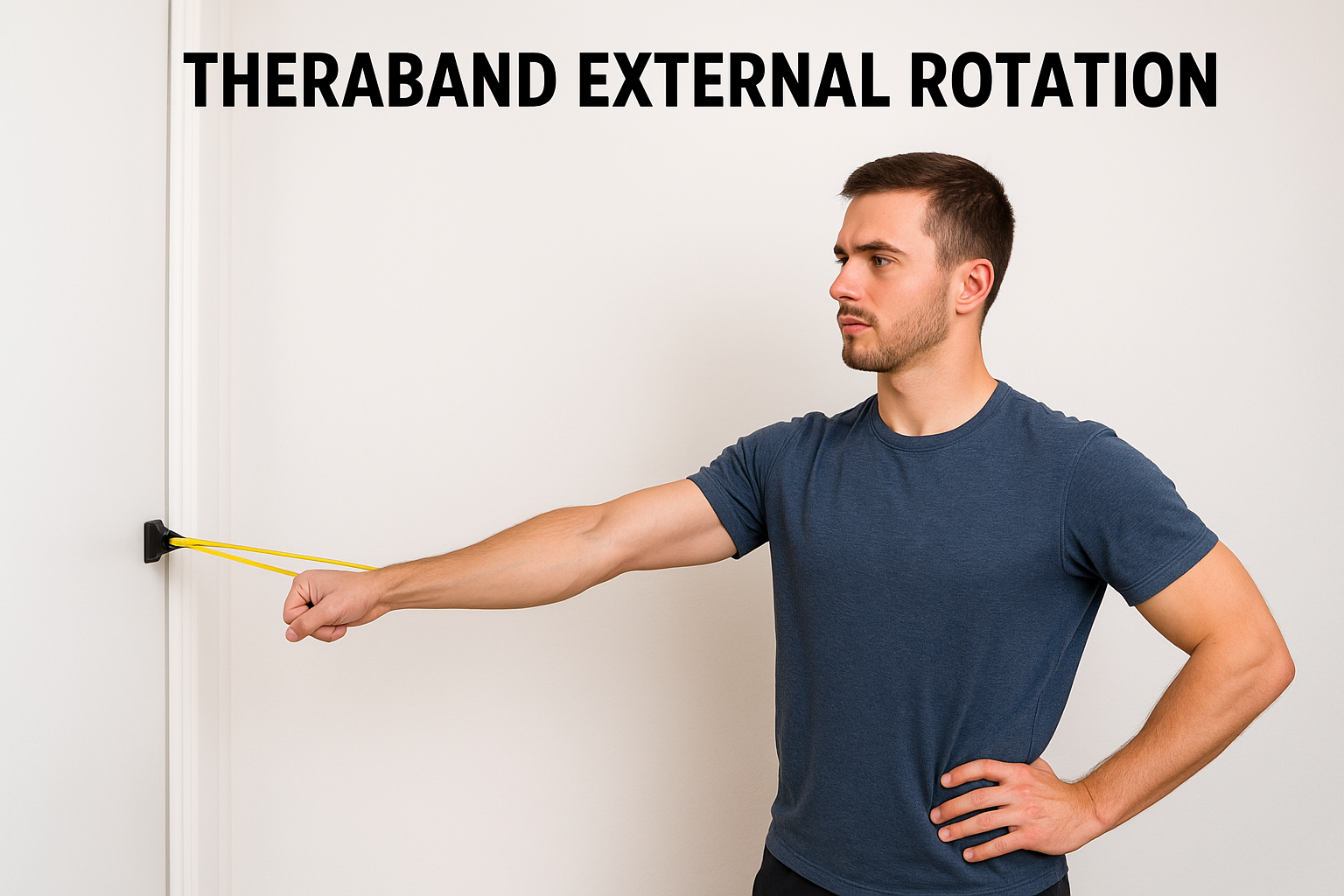
Shoulder pain or weakness is one of the most common fitness and daily life issues. Whether you’re an athlete, a fitness beginner, or someone who works long hours on a computer, your shoulders take a lot of stress every day. The theraBand external rotation exercise is one of the most effective and simple ways to strengthen your shoulders, improve posture, and prevent injury.
In this article, you’ll learn what the theraBand external rotation is, how to do it correctly, its benefits, and why it should be part of every shoulder routine.
What Is TheraBand External Rotation?
The theraBand external rotation is a shoulder exercise done using a resistance band such as a TheraBand. It targets the rotator cuff muscles — mainly the infraspinatus and teres minor — which are responsible for rotating your arm outward.
During this exercise, you keep your elbow close to your body and pull the band outward in a slow, controlled motion. It’s a low-impact movement, which makes it perfect for both rehabilitation and strength training.
Other names people use for this movement include band external rotation, resistance band shoulder rotation, and rotator cuff band exercise — all referring to the same motion of external shoulder rotation using a resistance band.
Why TheraBand External Rotation Matters
Strong and healthy shoulders rely heavily on balanced muscle development. Many people focus on pushing movements like bench presses or overhead presses, but they forget the pulling and stabilizing muscles. That’s where the theraBand external rotation becomes so important.
Here’s why it’s worth doing:
1. Improves Shoulder Strength
The theraBand external rotation works the smaller stabilizing muscles that keep your shoulder joint aligned. This helps you lift, throw, or move more safely and powerfully.
2. Prevents Shoulder Injuries
Weak external rotators often lead to shoulder pain, impingement, or rotator cuff injuries. This simple resistance band exercise strengthens those muscles, reducing your risk of injury.
3. Supports Better Posture
If you spend hours sitting or working on a computer, your shoulders tend to roll forward. Doing theraBand external rotation helps pull your shoulders back and maintain good posture.
4. Helps in Rehabilitation
Physical therapists often recommend the theraBand external rotation as part of shoulder rehab programs. It allows safe strengthening with adjustable resistance, which is ideal for recovery after surgery or injury.
5. Enhances Sports Performance
Athletes, especially those in tennis, baseball, volleyball, and swimming, benefit greatly from this exercise. Strong external rotators improve throwing accuracy, shoulder control, and overall upper-body power.
How to Do TheraBand External Rotation (Step-by-Step Guide)
You don’t need a gym for this exercise — just a resistance band and a stable anchor point.
Step 1: Set Up
Anchor your TheraBand at waist or elbow height. You can use a door handle or sturdy pole.
Step 2: Position Yourself
Stand sideways to the anchor point. Hold the band with your outside hand (the one farthest from the anchor). Keep your elbow bent at a 90-degree angle and close to your side.
Step 3: Perform the Movement
Rotate your forearm outward, away from your body, while keeping your elbow glued to your side. Go as far as your shoulder allows without twisting your torso.
Step 4: Return Slowly
Bring your arm back to the starting position slowly. Control both the outward and inward motions.
Step 5: Repeat
Do 2–3 sets of 12–15 repetitions on each arm. Rest for 30–45 seconds between sets.
Pro Tip: Keep your wrist straight and your shoulder down (don’t shrug). The movement should come entirely from the shoulder joint.
Common Mistakes to Avoid
Even though theraBand external rotation looks simple, small mistakes can reduce its benefits:
- Lifting the elbow away from the body
→ Always keep your elbow tucked to your side. - Using too much resistance
→ Start light and focus on form first. - Rotating your body
→ Keep your torso stable and still. - Shrugging shoulders
→ Keep your shoulders relaxed to prevent tension. - Rushing through reps
→ Slow, controlled movement works best for muscle activation.
When and How Often to Do TheraBand External Rotation
To build shoulder strength and stability, do the theraBand external rotation 2–4 times a week. You can perform it as a warm-up before weightlifting, a cool-down after training, or part of your shoulder rehab plan.
It fits perfectly into any workout routine and can be done at home, in the gym, or even at your office.
Example weekly routine:
- Monday & Thursday: Shoulder Stability Workout
- Tuesday & Friday: Upper Body Strength Day (include 2 sets of TheraBand External Rotation)
Best Time to Add It to Your Workout
You can include the theraBand external rotation:
- Before workouts – to activate the rotator cuff
- After workouts – to strengthen weak stabilizer muscles
- On rest days – to promote shoulder mobility and recovery
Consistency matters more than intensity. Doing this regularly helps you build long-term strength and stability.
Benefits Backed by Science
Multiple studies confirm the benefits of resistance band external rotation exercises. Research from The Journal of Sports Rehabilitation shows that band-based rotator cuff training increases shoulder joint stability and reduces injury risk in athletes.
Another study on PubMed found that an 8-week external rotation program using resistance bands improved muscle balance and reduced shoulder discomfort among active adults.
This scientific backing shows why the theraBand external rotation is highly recommended by physiotherapists, sports coaches, and medical experts worldwide.
Why Google Prefers This Topic
Search trends show a steady rise in people searching for:
- theraBand shoulder exercises
- rotator cuff band workouts
- external rotation with resistance band
- shoulder rehab at home
This proves that users are actively looking for practical, easy, and home-friendly fitness solutions. By writing about theraBand external rotation, your website targets a high-value, evergreen topic that builds trust, engagement, and organic traffic — exactly what Google’s E-E-A-T algorithm values.
Final Thoughts
The theraBand external rotation may look small, but its impact is huge. It strengthens your rotator cuff, stabilizes your shoulder, and keeps your joints healthy for years to come. Whether you’re recovering from an injury, preventing one, or simply trying to improve posture and mobility — this exercise deserves a spot in your weekly routine.
Start slow, use good form, and stay consistent. With time, your shoulders will feel stronger, more stable, and pain-free.

