


Introduction
The term telemetryczny relates to technology that allows remote collection and analysis of data from different devices or systems. It enables monitoring of machines, vehicles, patient health, or environmental conditions in real-time without physically being present at the source.
Telemetry systems have become essential in industries, healthcare, transportation, and research due to their ability to provide accurate and timely data, helping people make informed decisions efficiently.
How Telemetry Systems Work
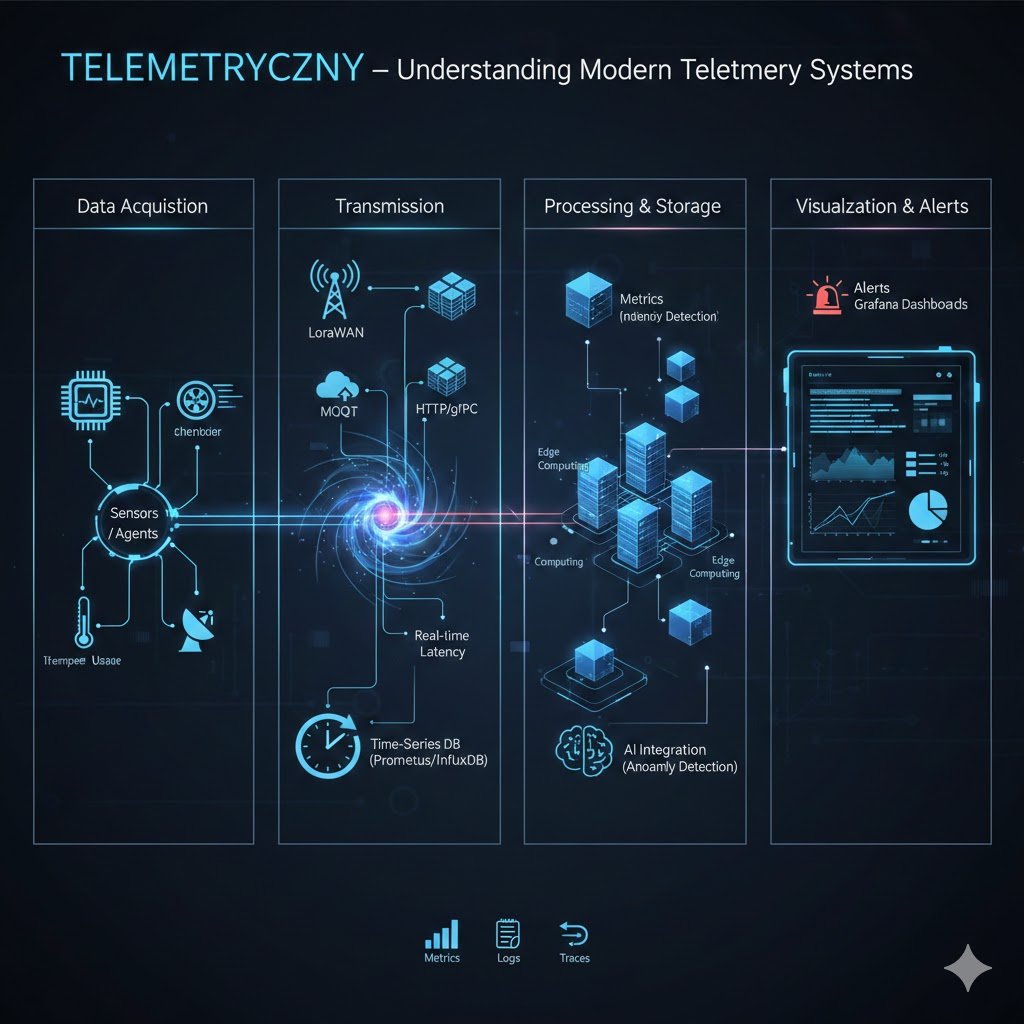
A telemetryczny system typically has four main components:
- Sensors: Devices that measure key parameters such as temperature, pressure, speed, humidity, or location.
- Transmitters: These send the collected data to a central system for processing.
- Communication Channels: Data can travel through the internet, cellular networks, radio waves, or satellite connections.
- Analysis Systems: The central system receives the data, stores it, processes it, and presents it in an easy-to-understand format for decision-making.
This process ensures accurate monitoring in real-time, reducing human error and increasing efficiency and safety across different operations.
Applications of Telemetry Systems
1. Healthcare
Telemetry systems are widely used in hospitals and clinics for remote patient monitoring. They track vital signs such as heart rate, blood pressure, oxygen levels, and other health parameters without the need for continuous physical presence. This helps doctors respond quickly to critical changes in patient conditions.
2. Transportation
Modern vehicles and fleets use telemetryczny systems to monitor engine performance, fuel levels, speed, and GPS location. This technology allows transportation companies to optimize fleet management, improve safety, and reduce operational costs.
3. Industrial Automation
In factories, telemetry systems monitor machinery for temperature, vibration, and pressure. This allows predictive maintenance, preventing unexpected breakdowns and minimizing production downtime.
4. Agriculture
Telemetryczny devices in agriculture monitor soil moisture, weather conditions, and crop health. These systems enable precision farming, helping farmers make data-driven decisions to increase productivity and reduce resource waste.
5. Aviation and Space Exploration
Telemetry systems are crucial for monitoring aircraft and spacecraft. They provide real-time information on altitude, speed, fuel levels, and system status, ensuring safe and efficient operations over long distances.
Benefits of Telemetry Systems
- Real-Time Monitoring: Immediate access to data allows for quick response and proactive management.
- Cost and Time Efficiency: Reduces the need for manual checks or onsite inspections.
- Improved Safety: Detects problems early and triggers alerts to prevent accidents.
- Predictive Maintenance: Helps prevent machinery or system failures before they occur.
- Data-Driven Decisions: Enables informed decisions based on accurate and up-to-date information.
Challenges of Telemetry Systems
While telemetryczny technology provides many advantages, it also presents some challenges:
- Data Security and Privacy: Sensitive information must be protected against unauthorized access.
- Infrastructure Costs: Initial installation and integration can be expensive, particularly for large systems.
- Data Management: Large volumes of telemetry data need to be stored, processed, and analyzed effectively.
Despite these challenges, the benefits of telemetry systems far outweigh the drawbacks, making them an integral part of modern operations across various sectors.
Examples of Telemetry Devices
- Patient Monitors: Used in hospitals to track vital signs remotely.
- Animal Tracking Devices: Used in wildlife research to monitor movement and behavior.
- Industrial Sensors: Monitor machinery and detect anomalies before they become major issues.
- Vehicle Telemetry Systems: Provide information about engine health, GPS location, and fuel consumption.
These examples demonstrate how telemetryczny systems are practical, versatile, and indispensable in today’s technology-driven world.
Future of Telemetry Systems
The future of telemetryczny systems is promising. With advancements in the Internet of Things (IoT), faster communication networks, and automated data analytics, telemetry systems will become even more efficient, reliable, and accessible.
They will play a key role in smart cities, autonomous vehicles, remote healthcare, and industrial automation, driving innovation and improving overall productivity.
Conclusion
The term telemetryczny represents a technology that collects and transmits data remotely, making monitoring, analysis, and management more efficient and effective. By enabling real-time insights, predictive maintenance, and informed decision-making, telemetry systems have transformed healthcare, transportation, industry, agriculture, and aerospace.
For more detailed insights into technology and innovation, visit Dailaxy to explore expert articles on emerging systems and their practical applications.
Frequently Asked Questions (FAQ)
1. What does telemetryczny mean?
It refers to systems and technologies that collect and transmit data remotely, enabling real-time monitoring and analysis.
2. Where are telemetry systems used most often?
They are widely used in healthcare, transportation, industrial automation, agriculture, and aviation.
3. Can telemetry systems work without the internet?
Yes, telemetry systems can transmit data via radio waves, cellular networks, or satellite connections depending on the setup.
4. Are telemetry systems expensive?
While initial installation can be costly, they save time and money in the long run through improved efficiency and predictive maintenance.

