


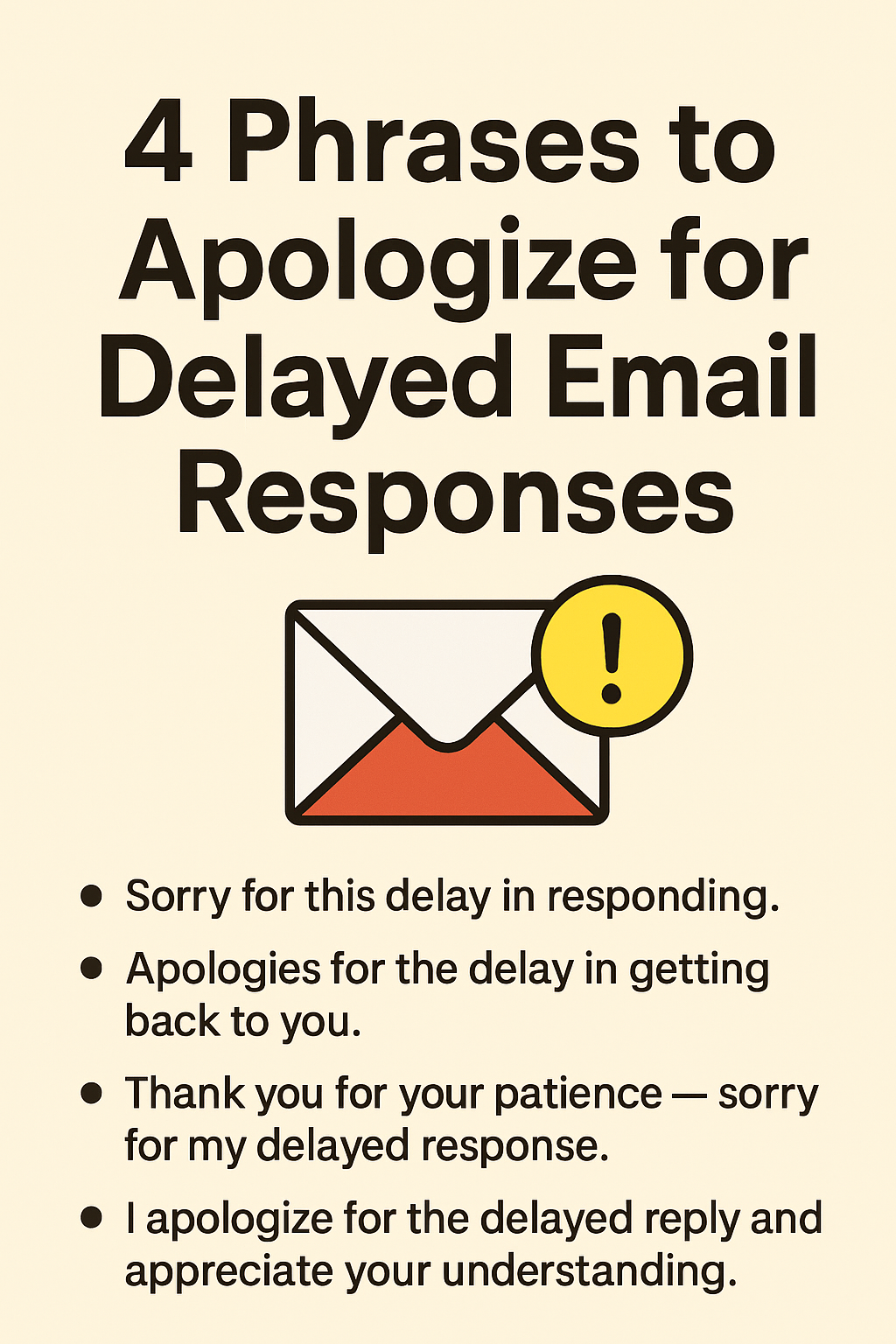
In a world full of fast communication, replying late to emails is something that happens to almost everyone. Busy schedules, a heavy workload, or simple forgetfulness can lead to delayed responses. The good news is that a thoughtful apology can quickly fix the situation and maintain strong relationships.
Using polite and honest language shows professionalism and respect for others’ time. Here are four simple phrases to apologize for delayed email responses that work well in both professional and personal communication.
1. “Sorry for this delay in responding.”
This is one of the most natural and respectful ways to acknowledge a delay. It’s short, sincere, and works in almost every situation — whether you’re replying to a client, a coworker, or a friend.
Example:
“Hi Emma, sorry for this delay in responding. I was confirming the latest project updates before getting back to you.”
This phrase helps you take responsibility without overexplaining. It also keeps your tone polite and professional. You can follow it with your main message or update to keep the conversation moving forward.
Related keywords: apology message, professional email, polite reply, delayed response, communication.
2. “Apologies for the delay in getting back to you.”
This version sounds a bit more formal and is ideal for business or client communication. The phrase “apologies for the delay in getting back to you” expresses accountability while keeping the tone calm and professional.
Example:
“Dear Mr. Wilson, apologies for the delay in getting back to you. We’ve reviewed your request and will share the final report tomorrow.”
This phrase works especially well when you want to sound respectful and responsible. It also gives you room to explain the reason for the delay briefly and set a new expectation.
Related keywords: apology email to client, formal communication, polite business reply, professional tone.
3. “Thank you for your patience — sorry for my delayed response.”
Adding a “thank you” before your apology makes your message sound positive and appreciative. It’s a great way to balance sincerity with gratitude.
Example:
“Hello James, thank you for your patience — sorry for my delayed response. I appreciate your understanding while I was away for a few days.”
This phrase feels warm and human. It acknowledges the delay but focuses on gratitude, which helps maintain a friendly tone even in a professional setting.
Related keywords: polite apology email, appreciation message, communication tone, understanding client, delayed email.
4. “I apologize for the delayed reply and appreciate your understanding.”
This phrase works best for formal emails or customer-facing communication. It’s polite, complete, and empathetic — showing both responsibility and gratitude.
Example:
“Dear Sarah, I apologize for the delayed reply and appreciate your understanding. The updated report is now attached for your review.”
This version acknowledges the delay, takes ownership, and closes with a respectful note. It’s a perfect fit for customer support, business follow-ups, or important project emails.
Related keywords: apology letter, delayed email response, formal business communication, customer relations.
Helpful Tips for Writing Delay Apologies
Using one of these phrases is a great start, but a good apology message also includes:
- A short explanation (only if needed) — briefly state why the delay happened.
- A solution or next step — mention what you’re doing to make things right.
- Gratitude — thank the recipient for understanding or waiting.
- A polite closing — end your message with warmth and professionalism.
Example:
“Sorry for this delay in sharing the file. It’s now attached for your review. Thank you for your patience, and please let me know if you need any changes.”
This keeps your message direct and respectful while shifting focus to action and resolution.
Why Apologizing the Right Way Matters
Saying “sorry for this delay” might seem like a small gesture, but it plays a big role in maintaining trust. When you admit a delay honestly, you show accountability — something every professional values.
Good communication isn’t just about being fast; it’s about being genuine. A polite apology builds stronger relationships, improves your professional image, and reassures others that you respect their time.
Semantic keywords: delayed email reply, polite professional tone, business communication, apology examples, customer trust, workplace etiquette.
How to Prevent Future Email Delays
It’s always better to reduce the need for apology emails in the first place. Here are some easy habits that help:
- Set reminders or follow-up flags in your email app.
- Prioritize important messages at the start of your day.
- Be honest early on — if you can’t reply soon, send a quick note: “I’ll get back to you by tomorrow.”
- Create simple templates for frequent responses.
These small steps save time and show consistency, which helps you avoid needing to say “sorry for this delay” often.
Final Thought
Delays are part of everyday communication, but how you handle them makes all the difference. Using simple, polite phrases like “sorry for this delay,” “apologies for the delay in getting back to you,” or “I apologize for the delayed reply” shows that you value honesty, respect, and professionalism.
A well-worded apology doesn’t just fix a delay — it strengthens trust and keeps communication clear and kind. So next time your inbox gets busy, remember that one thoughtful message can make everything right again.

