


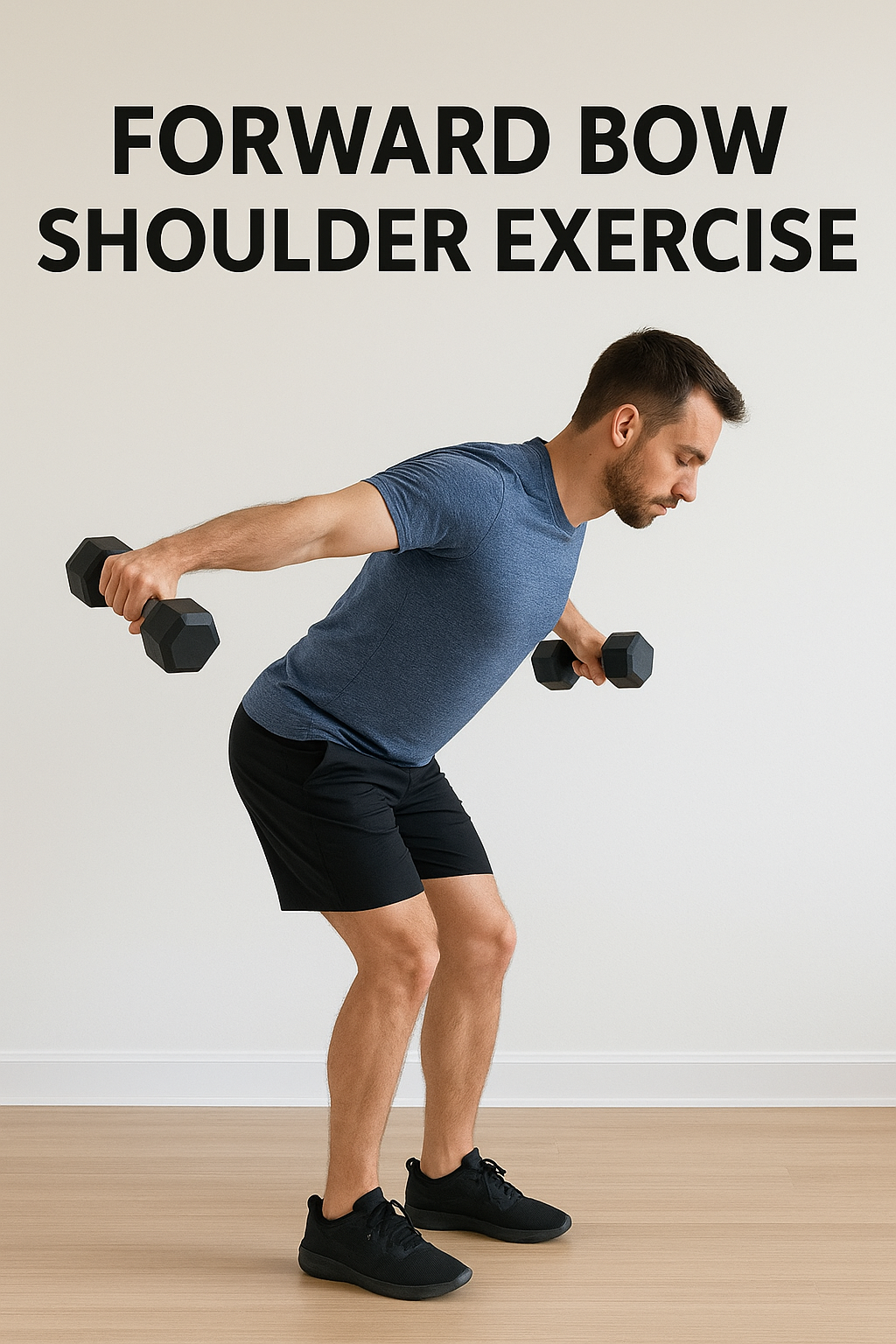
If you often feel your shoulders rounding forward, or you sit for long hours in front of a computer, the forward bow shoulder exercise can be a simple yet powerful move to help. This article explains what this exercise is, why it’s important, how to do it safely, and tips to get the most benefit — all using straightforward language.
What is the Forward Bow Shoulder Exercise?
The term “forward bow shoulder exercise” refers to a movement pattern where you bow (lean) your torso forward and engage the muscles around your shoulders, upper back, and scapula (shoulder-blade area). In effect, you counteract “rounded shoulders” and strengthen the stabiliser muscles that keep your shoulders in good alignment.
This exercise is related to other movements such as “bowing laterals” — where you hinge forward and raise dumbbells to the sides and then front, targeting the rear deltoids and upper back. springhillfitnesstn.com
It also connects to corrective posture work for forward head posture and rounded shoulders. Ulster University+2PubMed+2
By calling it the “forward bow shoulder exercise”, we emphasise the combination of the bowing (leaning forward) and the shoulder-blade / shoulder muscle activation.
Why You Should Do the Forward Bow Shoulder Exercise
Here are the key reasons this exercise is beneficial:
- Corrects rounded shoulders / poor posture: Many people develop shoulders that lean forward (also called “rounded shoulders”). This can cause neck pain, upper back stiffness, and shoulder discomfort. Wikipedia+1 The forward bow shoulder exercise helps pull the shoulders back, engages the scapular stabilisers, and opens the chest.
- Strengthens key muscles: It works the rear deltoids (posterior deltoids), the rotator cuff stabilisers, and the upper-back muscles that support healthy shoulder joints. For example, the bowing lateral raise variation is described as “fantastic for building up the rear delts and strengthening the deep stabilizers of the shoulder joint”. springhillfitnesstn.com
- Improves shoulder mobility and function: With stronger stabilisers and better muscle control, you’re less likely to suffer from shoulder impingement, strain, or limited range of motion when reaching overhead or behind you.
- Accessible & safe for many: This exercise can often be done with minimal equipment (light dumbbells or resistance bands) and can be adapted for different fitness levels.
Because it addresses both posture correction and shoulder-strengthening, the forward bow shoulder exercise is a trending pick in corrective exercise and rehab-friendly routines.
How to Perform the Forward Bow Shoulder Exercise
Here’s a step-by-step guide. Always check with your doctor or physical therapist if you have pre-existing shoulder, spine or neck conditions.
Setup
- Stand with your feet about hip-width apart. Keep a slight bend in your knees.
- Hold a pair of light dumbbells (or use resistance bands) in your hands. If you’re new to this, you can start with no weights.
- Hinge forward at your hips until your torso is at around a 45- to 90-degree angle (depending on your comfort and mobility). Keep your back flat (neutral spine), shoulders down (not shrugging), and core engaged.
- Let your arms hang down naturally with the weights (palms facing inwards or slightly forward). This is your start position.
Movement
- From the bow/leaned-forward position, squeeze your shoulder blades (scapula) together and down. Think of pulling your shoulders back, not lifting them up.
- Raise the dumbbells out to the sides (in a “T” or “Y” position) and optionally bring them forward (front raise) so that you feel the rear delts and upper back working. The variation described in the bowing lateral raise: hold weights out to sides, bow forward until upper body parallel, then bring dumbbells forward until arms straight ahead. springhillfitnesstn.com
- Maintain control: lower the weights slowly, keep tension on the muscles, and avoid swinging.
- Return to the start position, reset your posture (chest open, shoulders back), and repeat.
- Recommended: 2–3 sets of 8–12 reps (or as you build strength). Use lighter weights to ensure form is correct.
Tips & Safety
- Keep your spine neutral; do not round your back. A good posture helps the shoulder muscles activate correctly.
- Do not let your shoulders “hunch” forward during the movement. Instead, aim for scapular retraction (shoulder blades move toward spine) and depression (shoulders move down).
- Use light weight. The focus is on correct activation, not heavy lifting.
- Move slowly and with control — don’t rely on momentum.
- If you feel pain (sharp, sudden) in your shoulder or neck, stop and consult a professional.
When & How to Include It in Your Routine
- Warm-up / posture fix: After sitting for long hours, include the forward bow shoulder exercise to “wake up” your upper back, open your chest and prepare your shoulders for the day.
- Strength training session: Use it on your upper-body or shoulder-focus days, especially if you have a lot of pressing or overhead work. It balances the front-dominant pushes by strengthening the rear-side of shoulders.
- Posture correction program: If you have forward head posture or rounded shoulders, include this exercise 2-3 times a week along with chest stretches and upper-back work (for example, band pull-aparts, wall slides) as recommended for rounded-shoulder correction. Healthline+1
The Forward Bow Shoulder Exercise for Specific Cases
- Desk workers: If you spend much of the day hunched, slouched or looking down at a screen, you likely have tight chest/front shoulder muscles and weak upper-back/shoulder-blade muscles. The forward bow shoulder exercise helps restore balance.
- Athletes / gym-goers: People who focus on bench press, push-ups and front-shoulder dominant work often neglect the rear deltoids and stabilisers. Including this exercise helps reduce shoulder imbalance and injury risk.
- Rehabilitation / mobility focus: For individuals recovering from shoulder issues (impingement, rotator-cuff weakness, posture problems) this exercise — done with very light resistance — can be part of a safe program (though always under guidance).
Common Mistakes & How to Avoid Them
- Using too heavy weights: If you’re swinging or cheating the motion, the stabilisers don’t get properly engaged. Use lightweight until you master form.
- Rounding the back / hunching shoulders: This takes the load off the correct muscles and reduces the benefit. Always keep your back flat and shoulder blades engaged.
- Letting elbows flair or arms drop: Maintain control and keep the arms in the intended plane of motion.
- Speeding through reps: Quality over quantity. Focus on the muscle feeling, not the number of reps.
- Neglecting the posture part: Remember the “bow” (forward lean) plus the shoulder-activation. Skipping the bow forward means less benefit for posture correction.
Summary
If you’re looking for an exercise that helps correct posture, strengthen the upper back and shoulders, and reduce the risk of shoulder strain, the forward bow shoulder exercise is a strong pick. It effectively targets the muscles that keep your shoulders aligned, fight rounded-shoulder posture, and improve overall upper-body function.
By doing it consistently, with proper form and moderate resistance, you’ll likely see improvements in posture, shoulder comfort, and upper-body strength. Always move with control, listen to your body, and if you have any shoulder or spine issues, get advice from a qualified physical therapist or trainer.

