


ChatGPT said:
Band Shoulder Flexion: A Simple Guide to Stronger, Healthier Shoulders
If you’re looking to boost shoulder mobility, strength, and resilience, band shoulder flexion is an excellent exercise to add to your routine. In this article we’ll explain exactly what band shoulder flexion is, why it matters, how you do it right, who should try it, and key tips and mistakes to watch out for. We’ll use simple language and focus on you — not just SEO.
What is Band Shoulder Flexion?
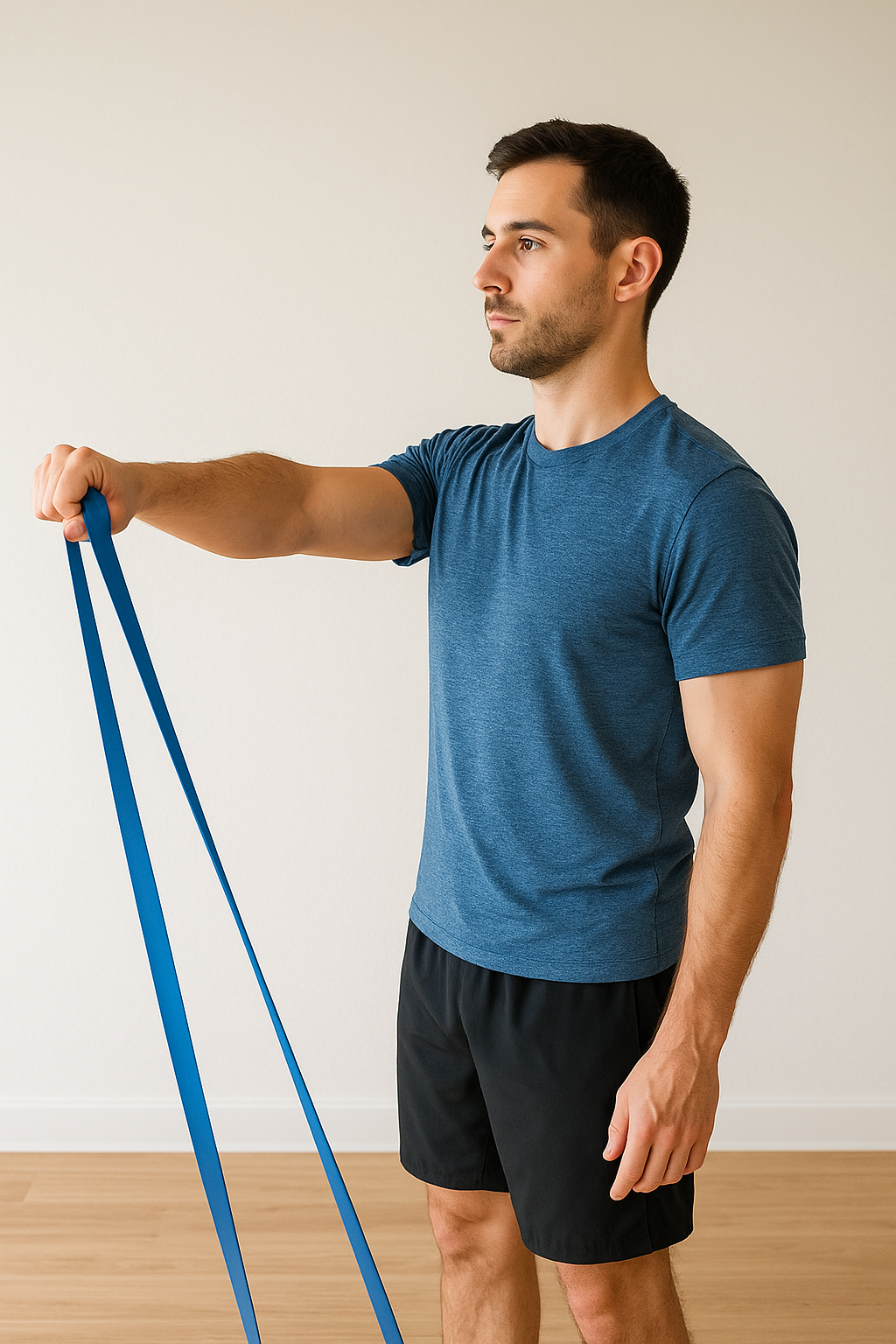
The term band shoulder flexion refers to lifting your arm forward (in the flexion plane) while using a resistance band. In other words: you anchor a band, hold one end in your hand, and raise your arm straight ahead and up, against the band’s resistance. The “band” part adds extra tension throughout the movement, which helps improve muscle activation, joint control and range of motion.
It’s sometimes called “banded shoulder flexion” or “resistance-band shoulder flexion”. FitMetrics+3Vybe Club+3Pelank+3
Because this is a movement pattern that the shoulder uses in many daily tasks (lifting something in front, reaching up), it’s highly functional.
Why You Should Add Band Shoulder Flexion to Your Routine
- Improves range of motion (ROM) – The shoulder joint is complex and often lacks full flexion (lifting arm in front/up) due to sitting, poor posture or inactivity. Using band shoulder flexion can gently open up that range. PMC+1
- Builds shoulder strength in a joint-friendly way – The resistance band provides constant tension, which allows the muscles around the shoulder (especially the front deltoid/anterior deltoid) to work throughout the movement. Pelank+1
- Enhances shoulder stability – Strong stabiliser muscles (rotator cuff, scapular stabilisers) are important for healthy shoulders. Band work supports that. dr-muscle.com+1
- Accessible and low-impact – You only need a resistance band; the movement is controlled and good for warming up, rehabilitation, or regular training. Well Wisp+1
- Improves posture and daily function – Good shoulder flexion helps with overhead reaching, lifting, everyday tasks. If your shoulder is stiff, many movements feel harder. MAGMA Fitness+1
Given these benefits, including band shoulder flexion can help whether you’re an athlete, someone recovering from shoulder trouble, or simply trying to stay mobile and strong.
How to Perform Band Shoulder Flexion – Step by Step
Here’s a clear step-by-step for doing the exercise properly:
- Set-up
- Anchor a resistance band at a low point (around floor or hip height) or step one foot on the band. Vybe Club+1
- Stand facing away from the anchor (so the band is in front of you) or standing on the band with the handle/end in your hand.
- Choose a band resistance you can control — not too heavy, especially if you’re new.
- Starting position
- Stand tall, feet shoulder-width apart, core engaged, shoulder blades relaxed (not shrugged).
- Your arm holding the band should be straight (or slight bend in elbow) down by your side or slightly in front.
- Execution – the flexion movement
- Pull the band forward and upward in a controlled manner, lifting your arm in front of you, aiming up to shoulder height or a bit higher depending on comfort and mobility. Vybe Club
- Keep the movement smooth; avoid jerking or swinging.
- Pause briefly at the top, feeling the muscles at work.
- Slowly return to the start position, resisting the band on the way down.
- Repetitions & sets
- For mobility or warm-up: try 8-12 reps, 2-3 sets.
- For strength: maybe 10-15 reps, 3-4 sets. Adjust based on your level and goal.
- Because the band provides tension throughout the movement, quality matters more than speed. Healthline
- Switch arms if you’re doing single-arm version. Or you can do both arms at once if you have two bands or a band anchored centrally.
Who Should Do Band Shoulder Flexion?
- Everyone looking to improve shoulder mobility or function — office workers, active folks, older adults.
- Athletes or exercisers who perform overhead movements (like weightlifting, swimming, throwing) — improving shoulder flexion and stability helps performance and reduces injury risk. Well Wisp+1
- People recovering from mild shoulder issues or wanting to prevent them. Because band shoulder flexion is low-impact, it’s often safe when used properly and with guidance.
- Anyone with posture issues or tightness in the front of shoulders/chest — this movement can help open and strengthen the front shoulder chain.
However: if you have a serious shoulder injury, recent surgery, or pain during the movement, consult a physiotherapist or healthcare provider before doing it.
Common Mistakes to Avoid
To get good results and stay safe when doing band shoulder flexion, watch out for:
- Using too strong a band — leads to compensations, swinging, or straining the joint. Start light.
- Shrugging the shoulder — raising the shoulder toward the ear while lifting arm reduces control and may cause tension. Keep your shoulders down and back.
- Bending the arm too much — while a slight bend is fine, excessive bend turns it into a different movement and reduces direct flexion load.
- Rapid/rebounding movements — You want controlled rise and descent; momentum reduces benefit and may strain. Healthline
- Ignoring posture/core engagement — standing tall, engaged core and stable stance matters. Avoid leaning or arching your back.
- Skipping progression or doing too few reps/sets — to improve mobility or strength, consistency counts.
How Band Shoulder Flexion Fits Into Your Workout or Rehab Routine
- Warm-up: Use band shoulder flexion before upper-body or overhead workouts to activate the shoulders and prepare them.
- Mobility session: On days when you want to simply open up the shoulders, doing 2-3 sets of band shoulder flexion helps improve range of motion.
- Strength training: As part of upper-body or shoulder-focused workouts, include band shoulder flexion along with other shoulder movements (presses, rows).
- Rehab/maintenance: Use it with moderate reps and low resistance to maintain shoulder health, especially if you sit a lot or have had shoulder issues.
Tips for Better Results
- Breathe: Exhale as you lift, inhale as you return.
- Visualise the movement: think of your arm moving in a smooth arc in front of you, not just yanking the band.
- Pause at the top: holding for 1-2 seconds at full flexion can enhance muscle engagement.
- Use full range of motion comfortable for you — don’t force it to pain. Over time you may lift your arm higher.
- Frequency: For mobility/maintenance do this 2-3 times per week. For strength maybe 3-4 times per week depending on your schedule and recovery.
- Combine with other band movements: e.g., external rotations, band pull-aparts, rows — to build balanced shoulder health.
- Monitor your body: If you feel discomfort (not just muscle fatigue) in the joint, stop and reassess form, resistance or consult a specialist.
Summary
The exercise band shoulder flexion is simple but highly effective. It helps improve shoulder flexion range of motion, strengthens key muscles (especially front deltoids and stabilisers), supports posture and daily function, and is accessible for almost anyone with a resistance band. Done correctly, it can be a go-to exercise for warming up, training shoulders, or rehabilitating. Focus on good form, controlled movement, and consistency — your shoulders will thank you.

